Holes, access cuts, cracked seams, damaged corners, and water-affected board each need a different repair plan. All World Construction LLC reviews the opening, backing, surrounding surface, texture, moisture history, and paint limits before defining a clean restoration scope. When plumbing, electrical, framing, cabinets, stucco, or paint are involved, those related repairs can be coordinated in one project.
Serving La Jolla from the Village and Shores to Mount Soledad hillsides.
Service scope / 01
Holes, Cracks, and Localized Patches
A durable patch depends on sound edges, suitable backing, the surrounding board condition, and a finish area large enough to manage the transition.
Review damage limits, nearby framing, and surrounding surface condition
Install agreed backing, board, joint treatment, and corner components
Prepare the repaired area for the specified texture and coating
Access work should end with a planned closure rather than an unfinished opening. The scope can coordinate required source repair, testing or inspection, and the related wall or ceiling restoration.
Confirm concealed work is ready for closure before covering the opening
Restore agreed drywall, texture, trim, cabinet, and paint areas
Keep required service access available where the approved plan calls for it
Texture changes with application, repairs, paint buildup, lighting, and age. The proposal should define the blend area and set practical expectations before work begins.
Identify the existing texture and visible transition boundaries
Prepare patch edges and surrounding surfaces within the approved area
Document texture, primer, paint, and color responsibilities clearly
Drywall restoration follows source correction and moisture review. The visible stain may not show the full affected area, and material condition can change the removal limit once the area is accessible.
Review source-repair and drying information before finish restoration
Remove affected material within documented and approved limits
Coordinate related insulation, framing, cabinets, texture, and paint
Larger repairs may involve baseboard, crown, doors, cabinets, lighting, framing, or exterior access. AWC can combine the related work into one written sequence with clear finish boundaries.
Map affected walls, ceilings, corners, trim, and adjoining components
Sequence related trade work before final closure and finishes
Protect occupied areas and document the completed repair limits
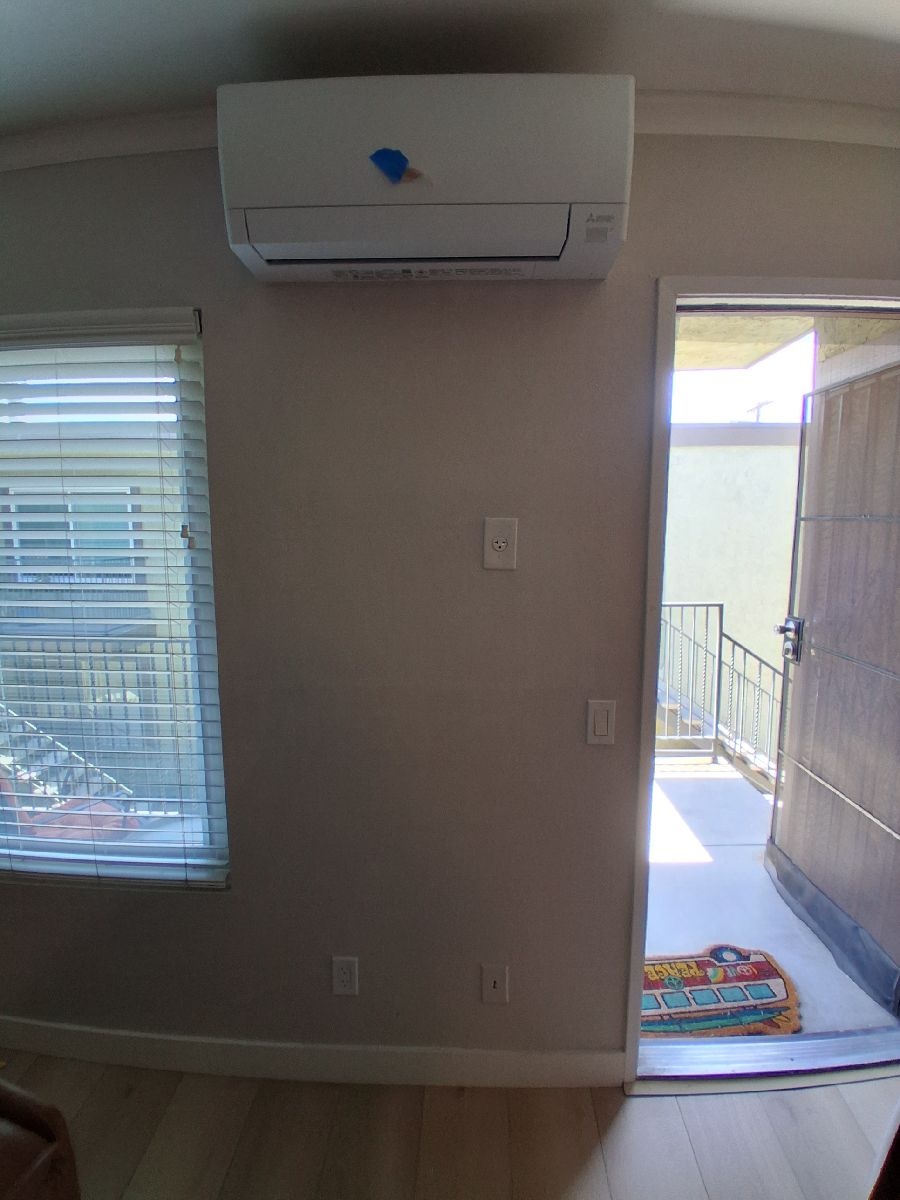
AWC drywall repair area after the wall finish and paint match were completed.
From the AWC work record
Drywall repair finished around a former wall opening
Observed condition
An interior wall needed drywall restoration after a former mini-split opening was closed.
Documented work
The drywall surface was completed and the repaired area received a paint match.
Photo stage
Finished interior wall view after drywall and paint work.
Planning lesson
A finished repair should be judged within the full wall plane, including how the surface and paint read in ordinary room light.
What this photo does not establish: The repaired location is subtle in this single photo; it is not a before-and-after comparison and does not document concealed work or the complete job scope.
Recognize the problem?
Common drywall repair examples.
Typical situations, not a diagnosis or a fixed scope. Start with what you can see. Expand an example to understand the next step.
Example 01
Access patch after plumbing or electrical work
A wall or ceiling opening remains after the source repair, testing, or inspection work is complete.
What we would check +
The repair approach
Confirm the related work is ready for closure, then define backing, board, joints, texture, primer, paint, and future-access limits.
Helpful photos
Send a room-wide view and close photos showing the full opening, cut edges, nearby devices, fixtures, cabinets, and texture.
Photos cannot confirm concealed framing, moisture, required access, or whether covered work is ready to close.
Opening a wall or working at an exterior penetration may affect more than one finish or system. AWC separates the immediate repair from related drywall, stucco, paint or access work so you can see what is included.
Site conditions, permits, access and any required specialty work are confirmed in the written scope. Additional concealed damage may require a written change order.
Can you repair drywall after plumbing or electrical access?+
Yes. AWC can coordinate the access opening, related repair, required testing or inspection, and the included drywall, texture, trim, cabinet, and paint restoration in one project scope.
Will the texture and paint disappear into the existing surface?+
A careful blend can reduce the transition, but existing texture, age, paint buildup, sheen, lighting, and patch size affect the result. The proposal should state the texture and coating area included.
Can water-damaged drywall be patched right away?+
The water source and moisture condition need to be addressed first. Stained or softened material may require removal, and unresolved moisture, contamination, or mold needs the appropriate evaluation before finish restoration.
What should I send for a drywall estimate?+
Send room-wide, close, and angled photos, the property address, known cause, approximate affected area, access conditions, source-repair status, and whether texture, primer, paint, or trim should be included.
Start with a conversation
Tell us what you see. We’ll help define the next step.