Is the opening ready?
Name the person and evidence that release source, trade, moisture, inspection, or other applicable prerequisites.

All World Construction · La Jolla
La Jolla Drywall
Serving La Jolla from the Village and Shores to Mount Soledad hillsides.
A wall or ceiling repair should account for texture, paint and the room around it. AWC defines closure readiness, protection and finish boundaries before the opening is covered.
After you contact AWCSend a room-wide photo, the opening and any leak-repair history. We review closure readiness and the texture and paint scope before work is scheduled.
Call 619-327-9513See documented AWC work
 Austin MitchellOwner, All World Construction LLC

An AWC owner article
AWC explains the approval points between leak repair, affected-material decisions, drywall closure, texture, primer, paint, and documentation.
The room-finish plan
Drywall is often the last visible stage of another repair. A finished result depends on what releases closure, how the board and joints meet the existing plane, how room lighting reveals texture, what paint boundary is approved, and how the occupied space is protected.
Send safe room-wide and close photos, opening or stain history, source-work status, finish expectations, and occupied-space constraints. Do not disturb suspect or unsafe material for photographs.
Check closure readinessName the person and evidence that release source, trade, moisture, inspection, or other applicable prerequisites.
Define backing, board, seams, corners, trim, fixtures, and the natural finish boundary instead of pricing only the hole.
Choose practical texture, primer, paint, lighting, punch, and closeout criteria before finish stages begin.
Six finished-room decisions
Use the guide that matches the decision in front of you, then keep the blank record with the approved scope.
Separate source work, drying or clearance, closure readiness, drywall repair, texture, primer, and paint decisions.
Open the guidePlan backing, board edges, joints, corners, trim, texture, paint, and retained access after a controlled opening.
Open the guidePlan overhead protection, fixture boundaries, texture samples, primer, paint, and practical appearance review.
Open the guideCompare spot touch-up, one plane, and broader painting by preparation, primer, sheen, light, and expected variation.
Open the guideCoordinate contents, paths, vents, fixtures, task controls, daily condition, communication, and return to use.
Open the guideRecord closure release, repair, texture, primer, paint, photos, changes, punch items, care, and exclusions.
Open the guide
Serving La Jolla
Serving La Jolla from the Village and Shores to Mount Soledad hillsides.
Start with the problem
For a La Jolla room with strong daylight or smooth finishes, include a wide photo in normal lighting. Patch placement, surface preparation and paint boundaries affect the result.
A durable patch depends on sound edges, suitable backing, the surrounding board condition, and a finish area large enough to manage the transition.
Explore the scopeAccess work should end with a planned closure rather than an unfinished opening. The scope can coordinate required source repair, testing or inspection, and the related wall or ceiling restoration.
Explore the scopeTexture changes with application, repairs, paint buildup, lighting, and age. The proposal should define the blend area and set practical expectations before work begins.
Explore the scopeDrywall restoration follows source correction and moisture review. The visible stain may not show the full affected area, and material condition can change the removal limit once the area is accessible.
Explore the scopeClose the opening completely
Drywall restoration should begin after the source work is complete and the opening is ready to close. The AWC ceiling image shows a completed restoration from the company work library; it is not presented as a La Jolla project.
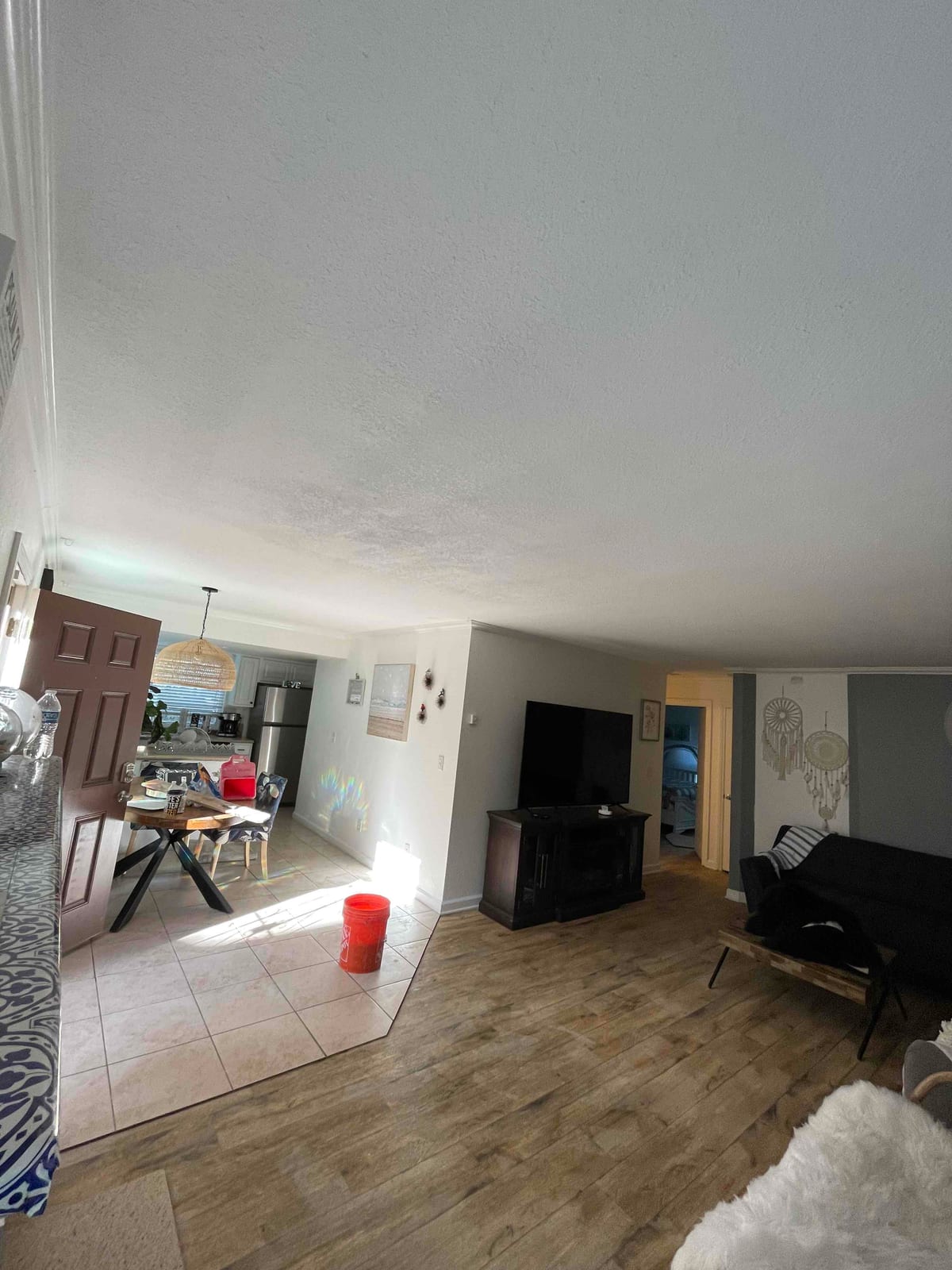
The repaired ceiling is shown after an access opening was restored with texture and paint completed.
Recognize the problem?
Typical situations, not a diagnosis or a fixed scope. Start with what you can see. Expand an example to understand the next step.
A wall or ceiling opening remains after the source repair, testing, or inspection work is complete.
Confirm the related work is ready for closure, then define backing, board, joints, texture, primer, paint, and future-access limits.
Send a room-wide view and close photos showing the full opening, cut edges, nearby devices, fixtures, cabinets, and texture.
Photos cannot confirm concealed framing, moisture, required access, or whether covered work is ready to close.
Text your repair photosA repaired area is smooth, visibly different, or surrounded by an existing texture that needs to be continued.
Review the texture profile, patch boundaries, lighting, coating history, and practical blend area before selecting the finish scope.
Send straight-on and angled views in even light, including the patch edges and a wider view of the wall or ceiling.
Texture and paint can often be blended carefully, but age, prior coatings, lighting, and application method affect the result.
Text your repair photosBoard is stained, soft, swollen, sagging, or opened after a roof, plumbing, window, or exterior-water problem.
Confirm the water source has been addressed and the area is ready for restoration before defining removal, drying, board, texture, and coating work.
Send safe wide and close views, the source-repair record when available, and a short description of timing and drying work.
A stain does not establish the source or concealed extent; active water, contamination, mold, or unresolved moisture needs separate evaluation.
Text your repair photosYour area. Your property.
The City describes La Jolla as a primarily residential coastal community defined by ocean bluffs, beaches, steep canyons and hillsides rising toward Mount Soledad. The Village is associated with Prospect Street, Girard Avenue and Torrey Pines Road, while the Shores is a distinct planning area. Those features can affect access and approvals, but they do not establish damage at any property. All World Construction develops site-specific scopes with clear investigation, protection and finish restoration.
Read the local planning guideConfirm slopes, stairs, parking and interior protection before demolition or delivery.
Identify coastal, planned-district, association and permit questions for the actual scope and address.
Coastline and hillside context guides inspection but does not diagnose drywall or concrete damage.
The AWC process
From the first photos to the written scope, keep the condition, the work and the decision clear.
Send the property address, clear wide and close photos, the known cause, source-repair status, access notes, and the texture or paint result you expect.
We separate confirmed conditions, backing and board work, related-trade dependencies, texture and coating areas, exclusions, and concealed-condition approval points.
Approved work is sequenced after required source repair, testing, drying, or inspection, then completed through the included texture, trim, and paint stages.
A real company behind your repair
AWC handles drywall requests in La Jolla with a practical plan: understand the condition, explain the scope and coordinate the related repairs.
When the site needs a closer look
For water-related, occupied-property, ceiling, multi-trade, widespread, or unclear conditions that need field verification, AWC may recommend the $250 Site Evaluation + Written Bid Package. The fee is credited back if the proposed work is approved within 30 days.
$250
Site Evaluation + Written Bid Package
Credited toward the work if approved within 30 days. Evaluation scope and terms confirmed before booking.
Discuss your projectBefore you book
Only after the source is corrected and the drywall is confirmed dry and sound.
A close blend may be possible, but lighting, application and aging can keep it visible.
Yes. AWC can coordinate the access opening, related repair, required testing or inspection, and the included drywall, texture, trim, cabinet, and paint restoration in one project scope.
Repair planning guide
Plan source repair, drying, damaged material removal, texture and paint before closing a ceiling after a leak.
A ceiling is ready for closure after the water source has been addressed, remaining materials are evaluated and the relevant repair checks are complete. A dry-looking stain alone is not proof. Define board repair, stain treatment, texture and paint after those conditions are established.
Read the repair guideStart with a conversation
La Jolla · Drywall · AWC